
A wise man (and I forget who – perhaps Mark Twain?) once said “You can’t always get what you want.” But how should we respond, when we aim for the stars and miss? Athletes have their own saying: “leave it all on the track”. If you put everything your training and into the race, do everything you possibly could to win, you should have no regrets about losing.
In the hugely competitive music industry, success is often fleeting, and comes in many degrees. But it’s normally pretty obvious if you haven’t made it.
***************
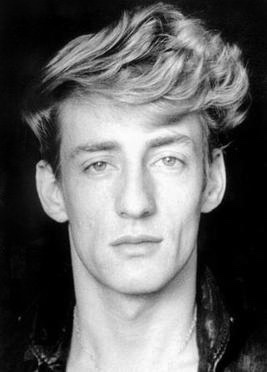
Consider Rory Storm. With his band the Hurricanes, at one point he was one of the biggest names in the burgeoning Merseybeat scene, alongside the Big Three and the Beatles. A natural showman, he anticipated Rod Stewart and Gary Glitter by almost a decade: dressed in gold boots, and/or a pink suit and pink tie, and perform tricks with the heavy mike stand. He would jump from the floor to the piano and do the splits. In the middle of the act he would go over to the piano, get out a large comb and comb his huge blond quiff.
He fronted an energetic band who gained a fanatical local following. Born Alan Caldwell, he changed his name to Al Storm, then to Jett Storm, and finally to Rory Storm – which he eventually formalised by deed poll. He also changed the name of the house where he lived with his mother to Hurricaneville.
Although he was an extremely popular live attraction in Liverpool, his voice didn’t sound great on record, and he never achieved chart success. These days Rory Storm and the Hurricanes are best remembered for Ringo Starr, who was recruited to the Beatles when Pete Best was sacked in 1962. Rory saw his drummer – his drummer! – go on to huge worldwide fame, while he remained no more than a colourful local character.
His life was to end tragically. In 1972 when he was working as a DJ in Amsterdam, he and Iris were called home after news that their father had died. While Rory was at home comforting his mother, he overdosed on a mixture of sleeping pills and alcohol, and died on 28th September. His mother Vi, consumed with grief after losing her husband and son, took her own life. Three of the family had died in the space of a few days. Some have speculated that Rory also deliberately took his own life, but his brother-in-law Shane Fenton/Alvin Stardust was convinced Rory’s death was unintentional:
“Rory became very ill. He had a chest condition which meant he couldn’t breathe properly. He found it difficult to sleep. so he’d take his pills with a drop of Scotch which doped him completely. At the post-mortem it was established that he hadn’t taken enough pills to kill himself. It had been nothing more than a case of trying to get some kip, but because he was so weak, his body couldn’t handle it. He died in the night and his mother found him. She must have felt that she’d lost everything. I think she took an overdose, but I’m convinced that Rory didn’t. When you’ve known somebody long enough, you know whether they’re going to do it or not. The whole thing was an accident.”
Billy Fury’s turn as Stormy Tempest in the 1973 film That’ll Be The Day was said to be based on Rory’s stage act.
His sister Iris went out at different times with both George Harrison and Paul McCartney, and became Iris Fenton when she married pop star Shane Fenton (who later went on to greater success as Alvin Stardust). Iris maintained that Rory was relaxed about seeing his friends and rivals achieve worldwide fame. “He was happy to be the King of Liverpool; he was never keen on touring, he didn’t want to give up running for the Pembroke Harriers … and he’d never miss a Liverpool football match!”
***************

Lee Curtis had everything going for him. A natural performer, good looks, fronting a rockin’ band in Liverpool in the early 1960s, and an older brother who was a manager in the music business.
Born Peter Flannery, his older brother Joe was prominent in the local music scene, but he was no Brian Epstein. Joe’s lack of success with his acts sparked the local saying, “Flannery will get you nowhere” – cruel but probably justified. Peter changed his name to Lee Curtis, reversing the name of the American singer known for his hits Pretty Little Angel Eyes and Under the Moon of Love.
In Spencer Leigh’s fascinating book Let’s Go Down the Cavern from 1984 Curtis told his story. The closest Lee Curtis and the All-Stars came to having a hit was with Let’s Stomp, which featured Pete Best on drums. Curtis hated it:
“Let’s Stomp was diabolical. The original by Bobby Comstock was absolutely brilliant and as the Stomp was popular on Merseyside, we’d asked Decca if we could cover it. They wanted us to rave away madly at the end by doing a repeat of the words “Let’s Stomp”. We were a bit green and we agreed and I think we repeated the words “Let’s Stomp” thirty- six times. I got sick of counting. The record was released and it died.’
To get a better impression of the excitement this band could generate, listen to their thrilling version of Bill Haley’s Skinny Minnie, recorded live at the Cavern. The crowd reaction when Curtis yells “Up!” is an electrifying moment.
So much the sadder that he never made it. Unfortunately his group signed to Decca, who – despite signing the Rolling Stones – often seemed to have no clue what to do with the talent on their roster – or in this case, preferred to use Lee Curtis and the All-Stars as a source of recording ideas:
“We made suggestions to Decca about numbers that we would like to record. We asked if we could do Twist and Shout. They said no and a few weeks later it was a hit on Decca for Brian Poole and the Tremeloes. We then asked if could do Money. They said no and it was a hit on Decca for Bern Elliott and the Fenmen. Next we asked if we could do Shout. They said no and it was a hit on Decca for Lulu with the Luvvers. We asked if we could do It’s Only Make Believe. They said no and it was a hit on Decca for Billy Fury. We wasted our opportunities with Let’s Stomp and that monotonous ending.”
At the end of 1962 Lee Curtis and the All-Stars had placed second only to the Beatles in the Mersey Beat poll. But the magazine – such a great champion of Liverpool groups – riled Curtis, as he relates here:
“There were so many of us trying to make it. Guitarists went into ridiculous debt buying £300 Gretsch guitars, and anything that hindered you from making your living and being able to pay for these things was a bit naughty. That’s why I objected to one of Bill Harry’s editorials. He gave a list of Liverpool performers he knew to be married. John Lennon was included and so was I. Twelve-year-old girls would come up to me with tears in their eyes and say, “You’re not married, are you, Lee?””
Lennon managed to recover from this setback: Curtis not so much. As the name hints, the personnel of the All-Stars was changeable: Curtis was essentially a solo act in the time of groups, caught between the eras of Cliff Richard and Tom Jones. When other Liverpool acts were making the charts he was resident at the Star-Club in Hamburg. He recorded some ballads in Germany without success.
He told Spencer Leigh “I wish that I had all the money that was owing to me. I’ve been involved in seven or eight LPs but I’ve never had a penny in royalties. We’d do gigs and find that the guy who was responsible for paying us had been called away. We were told we’d get a cheque and if we did it was a rubber one. There are thousands of pounds owing to me. If I was eighteen or nineteen, as I was then, I could think of myself as making it today. I know I was good enough then. I envy all those people who made it. I’d love to have made it and I think about it every day of my life.”
Pete Flannery aka Lee Curtis died in 2023.
***************

The Mint Juleps were a 1980s east London a capella girl band, and I loved them. They played some great gigs, had some good TV exposure and went over to the US, but never made it big. Some of the band have worked as backing singers, but mostly they have returned to civilian life. Happily they seem not to dwell on coming so tantalisingly close to stardom, and in this 2013 interview two of them focus on the things they got to do and the fun they had. Debbie Longworth says “We were like kids, just messing about and having a good time, but we were getting paid for it as well.” Debbie Charles says “Absolutely no regrets at all, I would not change anything. People ask me if I miss the Mint Juleps…I miss sitting in our minibus with those five other people, because we used to laugh till we cried.”
Those responses don’t surprise me: they are flavoured with the optimism and joy which characterised their every gig. And they seem like positive and happy reflections on a career which didn’t climb as high or last as long as they would have hoped. Five of the six Mint Juleps reunited for a triumphant gig in east London in February 2025. It was wonderful and they’d lost none of their magic. Bless them.


Leave a Reply