Warning: contains descriptions and video of an animal being hunted.
My brother and I recently went to Botswana with our daughters: it was a marvellous trip, although sometimes a sobering one.
The game drives start at dawn, as the animals are less active in the heat of the day. We were warned to dress warm: winter temperatures at sunrise can be as low as 5°C, and we were travelling in an open jeep.
This day started well: we soon came upon two prowling male lions, clearly hunting. Our guide followed them at a polite distance: they didn’t seem at all interested or concerned.
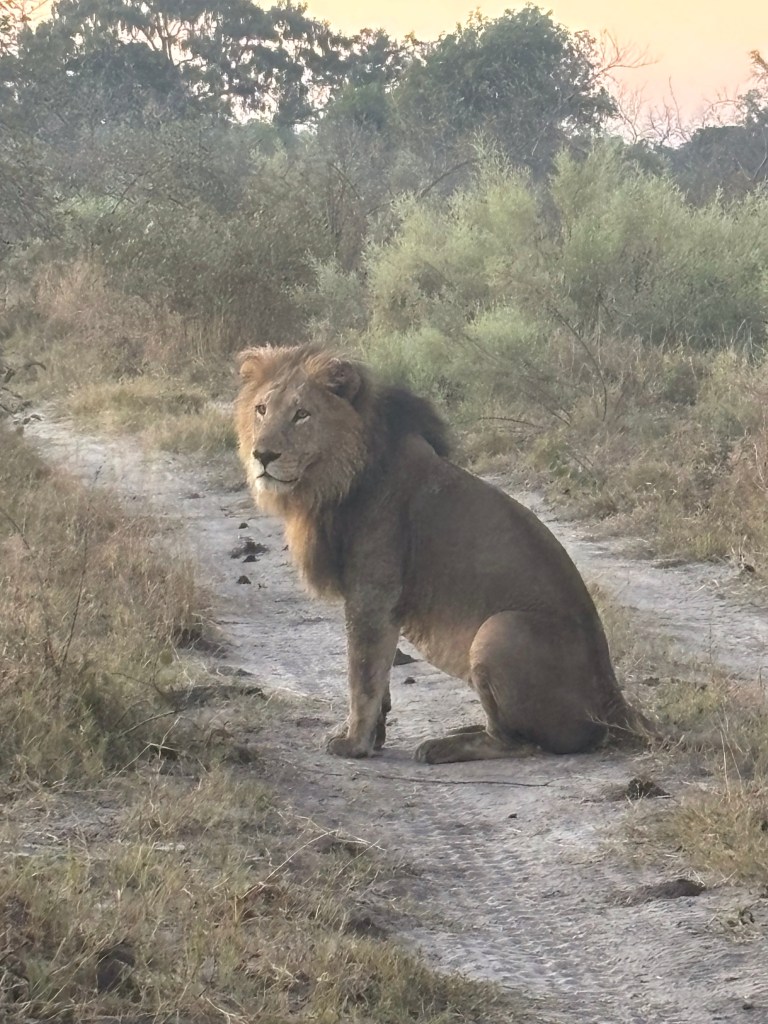

We soon found out that there were buffalo nearby, and our guide located them. He observed that they were on edge. It seemed they were aware of the lions: they had adopted a tight formation, in a roughly square shape, with the larger animals’ horns facing outwards.

With their prey alerted, the lions would not be able to pick off an isolated beast. We didn’t see the lions again, but were told that this hunt had been unsuccessful.
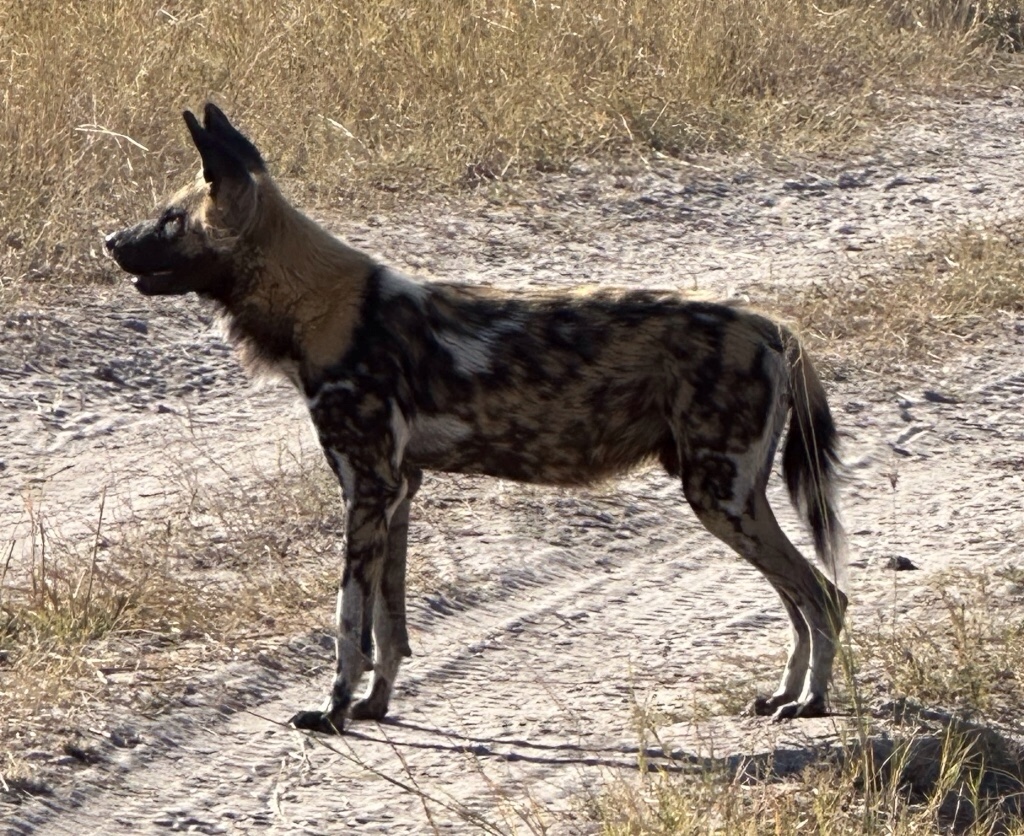
It wasn’t long before we saw a much rarer species: African Wild Dogs.
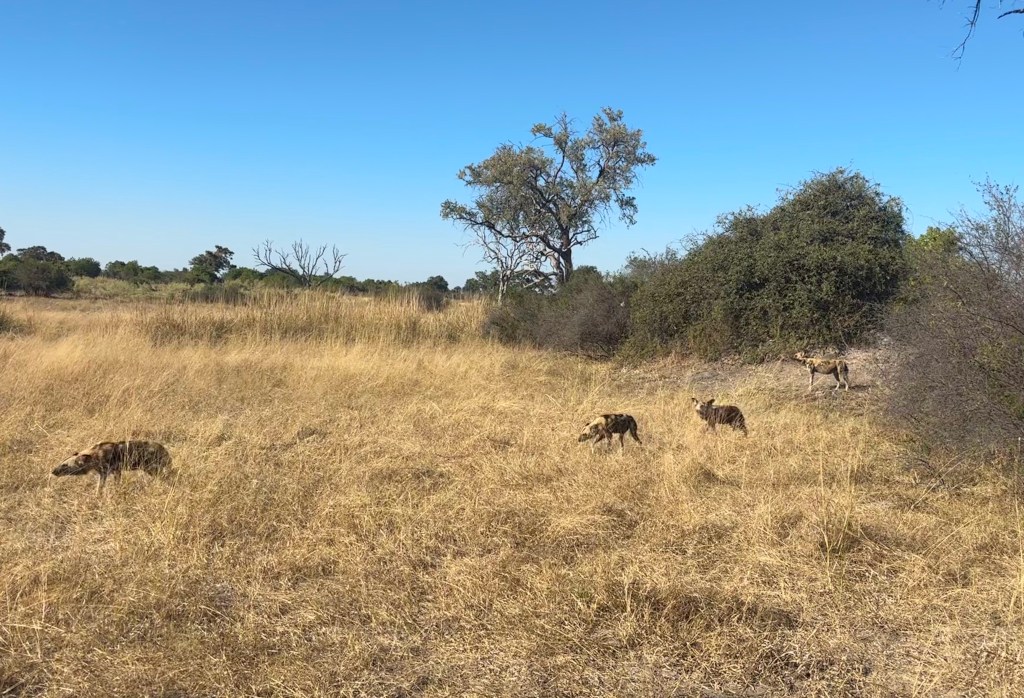
There was a line of five moving purposefully across the scrub in single file.
The animal at the back was heavily pregnant. The dog at the front was stooped low to the ground.

They were tracking a warthog (“Pumbaa” as our guide called them) and suddenly took off at full speed. We lost sight of them, but we were not the only jeep tracking them. Our guide’s radio crackled, and he set off with urgency.
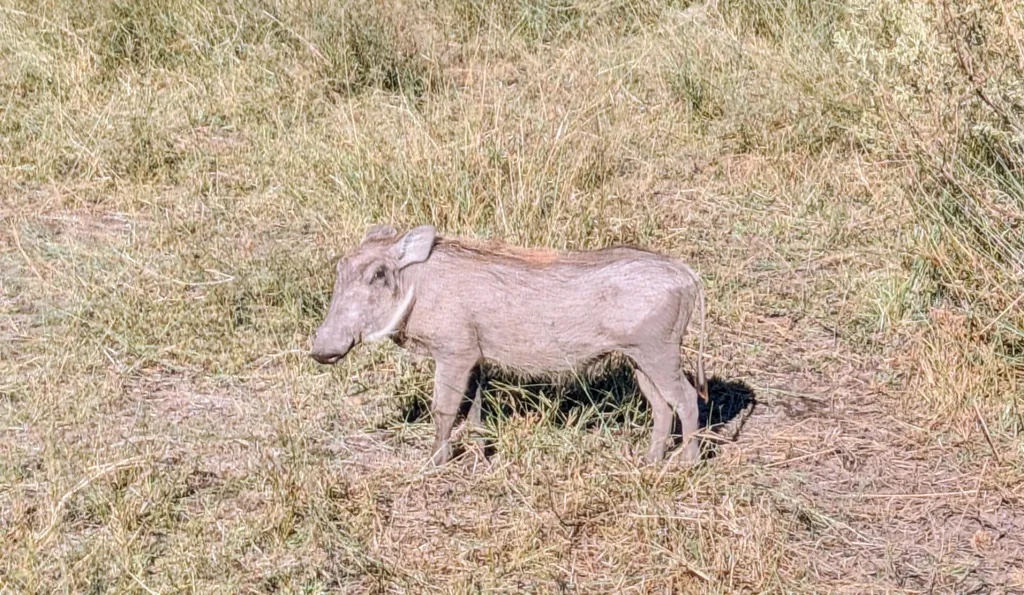
We soon caught up with the hunt. The terrified warthog – which we were told was an adult female – was isolated from her burrow, and had backed herself into a thicket to protect her rear. The dogs were taking turns to attack her, two at a time, and their only access was to her head. She wasn’t giving up without a fight, and sometimes her head came into view as she launched a counterattack.
The dogs showed perfect teamwork: after a spell attacking the warthog, each dog would retire temporarily, and lie panting on the ground. Immediately one of the others would get up and go to take its turn.

Eventually the dogs all withdrew, waiting and resting. After a while the warthog made a dash to escape. She didn’t get far before the dogs were on her. I won’t forget what I saw next.
Bent on avoiding any further damage from her tusks and teeth, the dogs sunk their teeth into her haunches and started tearing at the flesh from behind. The warthog squealed loudly in terror and desperation. The gruesome spectacle seemed to last forever, but we later estimated it had lasted just one to two minutes before the squealing mercifully stopped. The dogs had killed the animal by tearing into the haunches and belly.
I was horrified. During the hunt, perhaps influenced by the anticlimactic conclusion to the earlier lions’ hunt, I had been willing the wild dogs on. But when we saw what their victory looked like, we sat in shock.
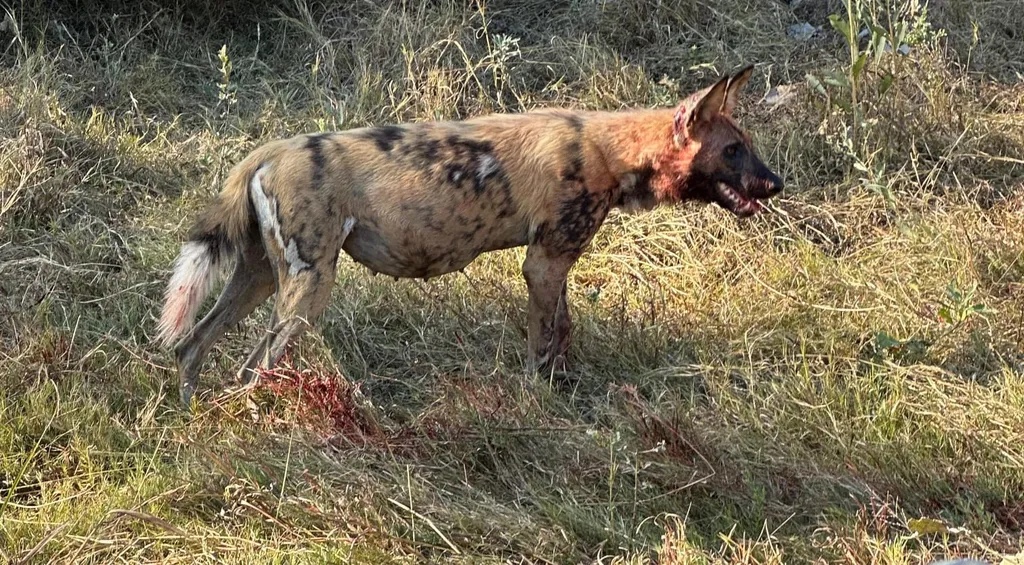
Of course, I was being naïve. It is frequently said, after all, that nature is red in tooth and claw. But the kills shown on nature programmes typically show predators like lions, which kill their prey and then eat them. The spectacle we had just witnessed was especially gruesome because the dogs had killed their prey by eating it. This was not cruelty on their part: it was simply the safest way for them to do it.
They continued to devour the carcass as fast as they could: the sound and smell of the kill had travelled a long distance, and would very soon attract other predators like lions or hyenas which would chase them away from their feast.
The frenzied feeding was in sharp contrast with the scene from two days earlier, when we had watched a pride of lions eating a dead buffalo. Their feeding was leisurely, relaxed and according to a strict hierarchy: males, females and then cubs. There were many vultures and a lone hyena hanging about, but the lions were taking their time. Nothing was going to steal their kill.
Interestingly, this behaviour persists in domesticated animals. Cats will take their time, and frequently request food then walk away from it. Dogs, meanwhile, usually rapidly eat everything set before them. Although my perspective on this could be affected by having owned a labrador.
The drama and violence of the scene was also very different from an idyllically peaceful scene we had observed at a waterhole a few days earlier: we watched a “tower” of giraffes quietly giving way to a “dazzle” of zebras.


Examining my reaction to witnessing the death of the poor warthog, I confess to having been as much excited as horrified. Here was nature at its most brutal. All the trappings of civilisation have not removed the visceral thrill of combat: then gladiators, now boxing, bullfighting, thrillers, TV news…still keenly followed, mostly but not exclusively by men. For many, the thrill of bloodshed seems to have outlasted our need to hunt.
(Photos and video: Alice Edwards)


 Ramblings
Leave a reply to Rik Cancel reply