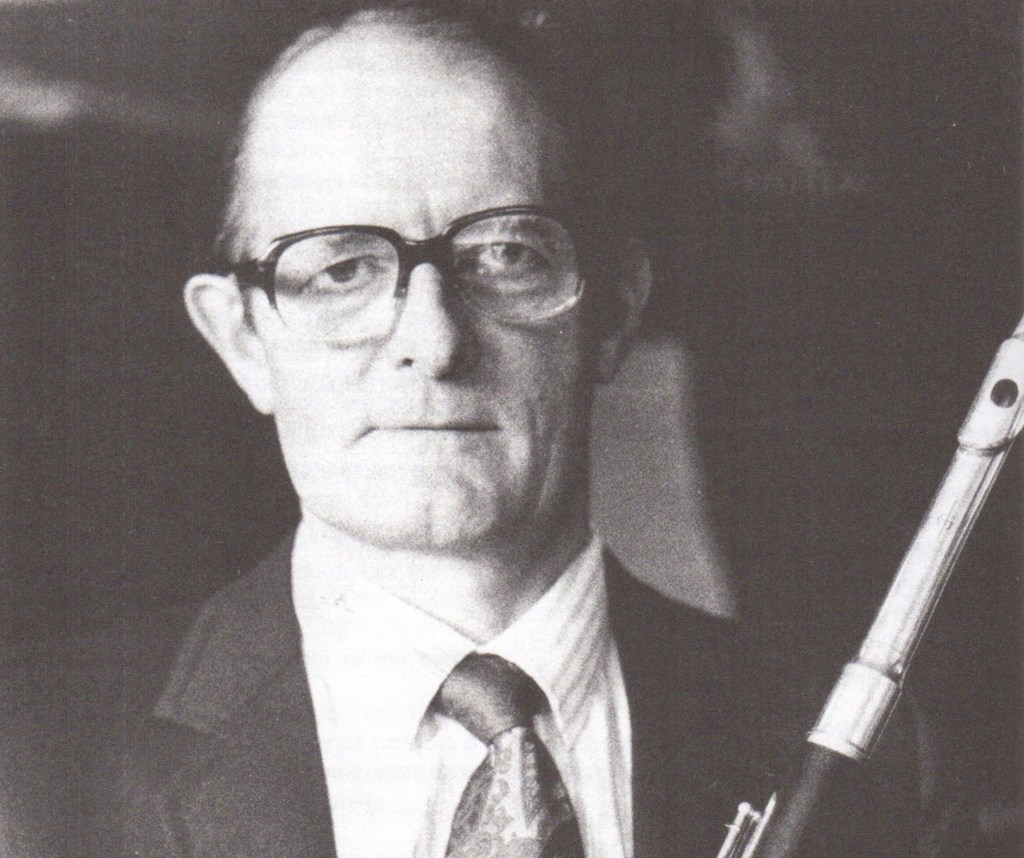
In 1959 John Didcock was recruited by Frank Thomas at Watford Grammar School for Boys to be assistant music master. He taught Music, French and Russian there until 1990, and several of his pupils went on to professional careers in music, including composer Oliver Knussen and conductor Andrew Davis. It was as Head of Music from about 1973 that he made the greatest impact, driving standards to a remarkably high level, with the school orchestra tackling many ambitious programmes with great success.
My own involvement in music at school was modest: I sang in the choir for my first three years at the school, and was given the opportunity to shine at the violin, which I did not. Didcock was an enthusiastic choral teacher, and managed to drill 120 first years into spirited renditions of The Daniel Jazz and The Jonah-Man Jazz – great fun to sing, and I still remember chunks of them. They went down a storm at school concerts. I also enjoyed enjoyed singing spirituals and Handel’s Messiah with the choir.
He showed his flexibility and won friends in March 1970 when he moved a choir rehearsal to avoid a clash with the FA Cup game between Watford and Chelsea. “Watford don’t get this far very often” he said. Indeed, and Chelsea won 5-1. He also taught me French very thoroughly, and helped me towards a respectable O-level result.
I’ve never been a teacher, but it must be a strange and slightly poignant experience to pour your heart into teaching children, most of whom will leave your life at 11, 16 or 18, and never return. How will they remember you? Will they remember you at all?
But when they heard that Mr Didcock was due to celebrate his 90th birthday on Saturday 5th July (2025), three of his ex-pupils were determined that he, at least, would be in no doubt that he was hugely respected for his achievements at the school, and fondly remembered by many of his former pupils and colleagues. So David Dennis, Simon Groves and Julian Groves set about compiling a book covering John’s years at Watford, for presentation on his 90th birthday.
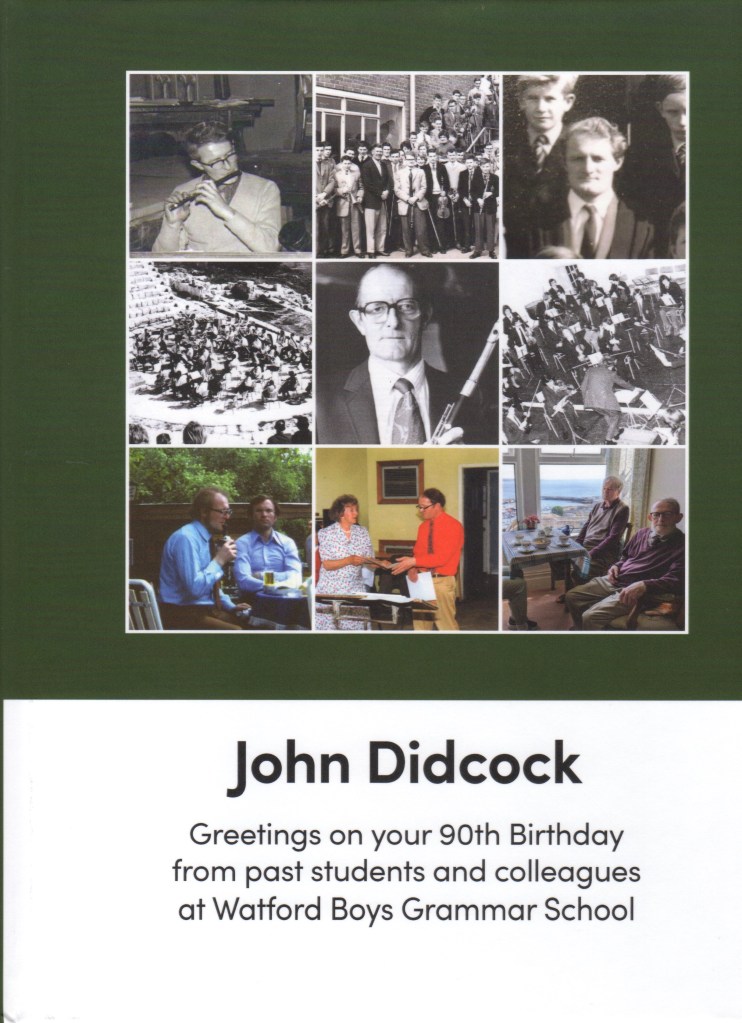
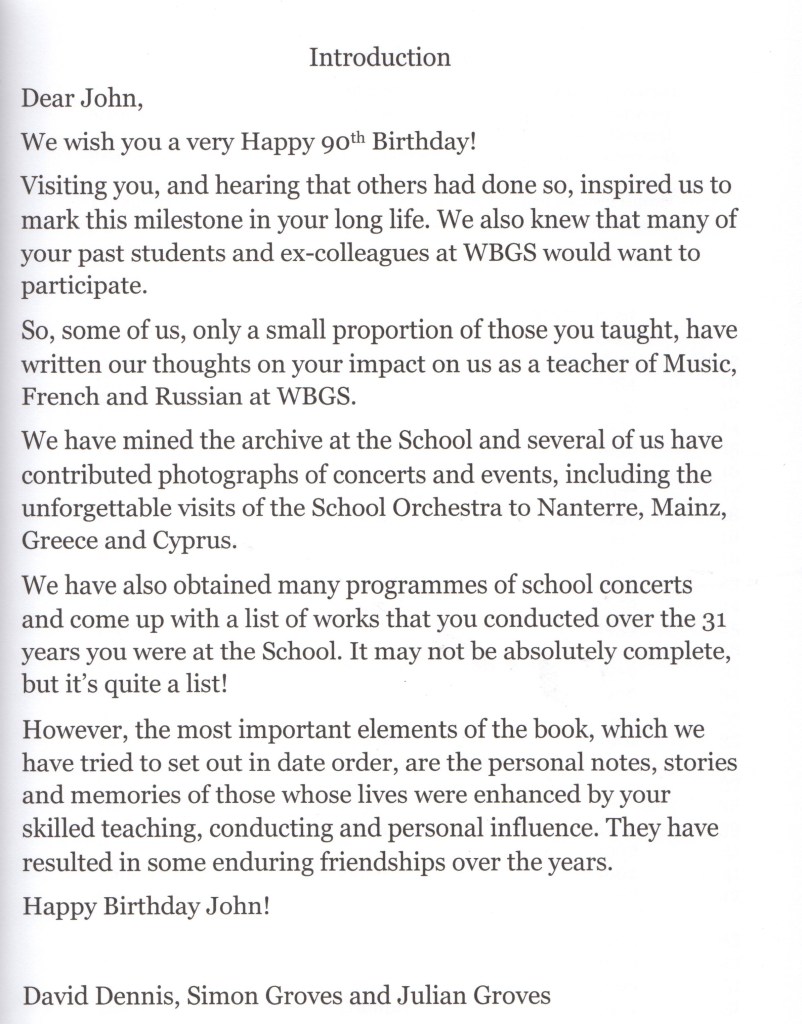
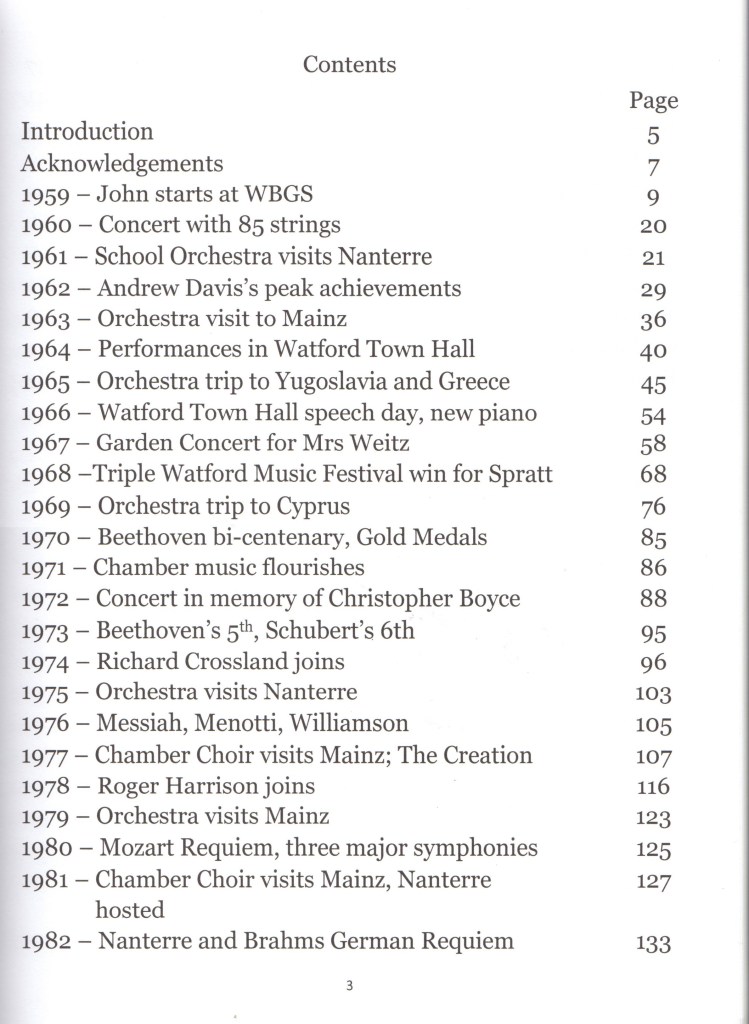
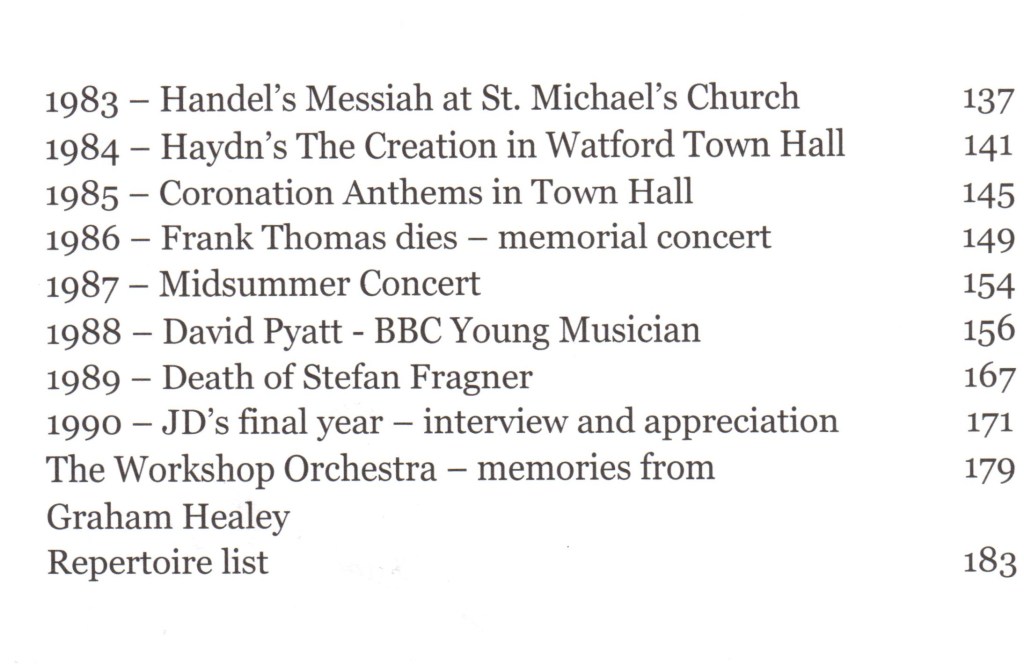
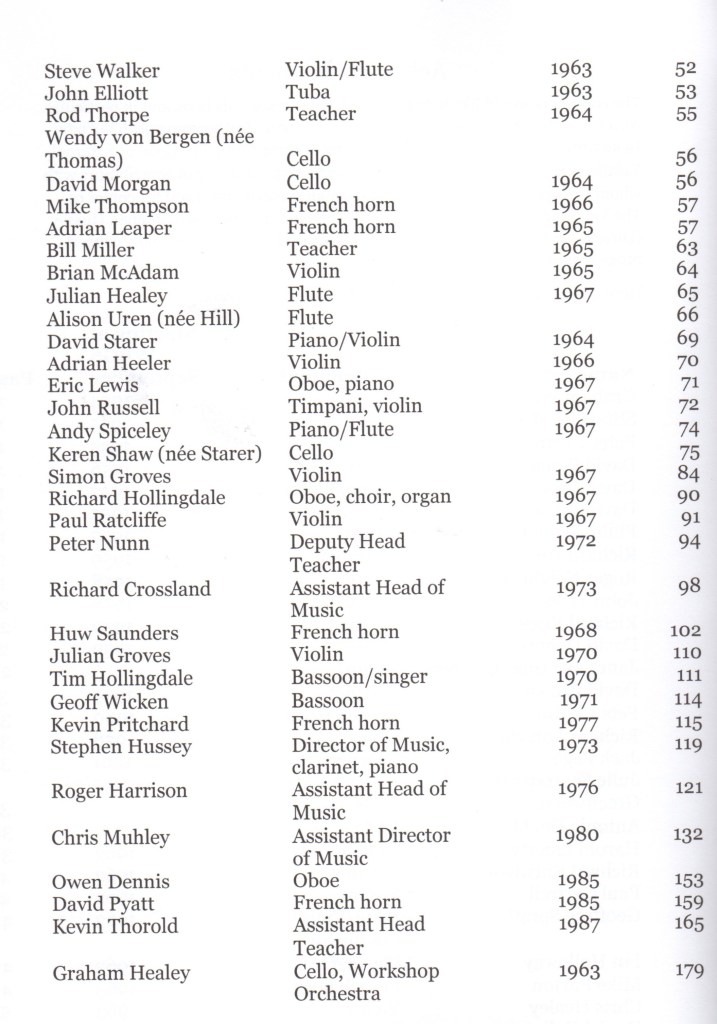
The book includes contemporary articles from The Fullerian, (our school magazine), photographs of concerts events and visits abroad, and school concert programmes. A substantial part consists of stories, memories and tributes from the people he taught. Without exception they demonstrate the high regard and affection with which he is remembered. The emphasis is very much on his music teaching.
When I learned of this excellent project, I alerted a few fellow Old Fullerians to it: almost everyone I contacted had happy memories to share, or stories of how Mr Didcock had touched their lives:
- “John Didcock is a teacher I remember fondly. Always gave the impression of being happy and I felt I got infected with his happiness. If you are in contact with Mr Didcock, please send him my fondest regards.”
- “He was full of energy and enthusiasm, for French and also for Music, his great love. He certainly drummed French grammar in very well. “Aller, venir, entrer, sortir, monter, descendre, tomber, etc….” He made an impression on us all, and I hope that some idea of this can be conveyed to him.”
- “Mr Didcock was the teacher who in one lesson I remember upstairs in an outbuilding made me realise that there might be something in classical music. It was, I think, Vltava from Smetana’s Ma Vlast, all about a river going through Czechoslovakia. I owe him one.”
- “I recall that too. I think there was also Beethoven’s Pastoral Symphony. Mr Didcock was trying, I believe, to get us to appreciate through those works the representation of images and feelings in music, certainly nationalistic feelings in the case of Ma Vlast. A very worthwhile lesson, not that I appreciated it at the time. He had the unenviable task of trying to get me to play the double bass part to Dvorak’s From the New World Symphony. There again, Michael Thompson and Adrian Leaper went on to great musical success.“
- “I recall John Didcock playing us classical pieces in the music room over the gym changing rooms. I had some moment of enlightenment too, because when the school’s music collection moved from 78s to LPs I acquired several, which I still have. I owe that to Mr Didcock.”
- “John Didcock had an old, quite large car. He passed us in the opposite direction along a country lane near Sarratt once. He struggled to get through. When we were in Norway in 2000, we met someone who had worked with John Didcock at WBGS. He had a very high opinion of him. Happy Birthday, Mr D!”
One of the most revealing tributes came from an unexpected source. An ex-pupil who confessed to a chequered disciplinary record at the school wrote: “I found him enthusiastic as a music teacher. He was also a very nice bloke; one of the few who were prepared to look beyond my bad reputation and give me a fair hearing.” It’s quite easy to teach a good pupil. But to connect, as he did, with the more difficult ones, is something special and rare.
Receiving these responses just from the tiny percentage of Mr Didcock’s pupils that I polled makes it obvious that there must be thousands of WBGS alumni (and quite a few Watford Grammar School for Girls alumnae, who also played in the orchestra) out there with similar gratitude, affection and happy memories of him, and he will often have changed their lives in a small but positive way where music was concerned.

On the day of John Didcock’s 90th birthday, he was visited at his home in Newlyn, Cornwall by David Dennis (pupil 1959-66), Bill Miller (Physics 1965-2002) and Chris Muhley (Assistant Director of Music 1980-85).
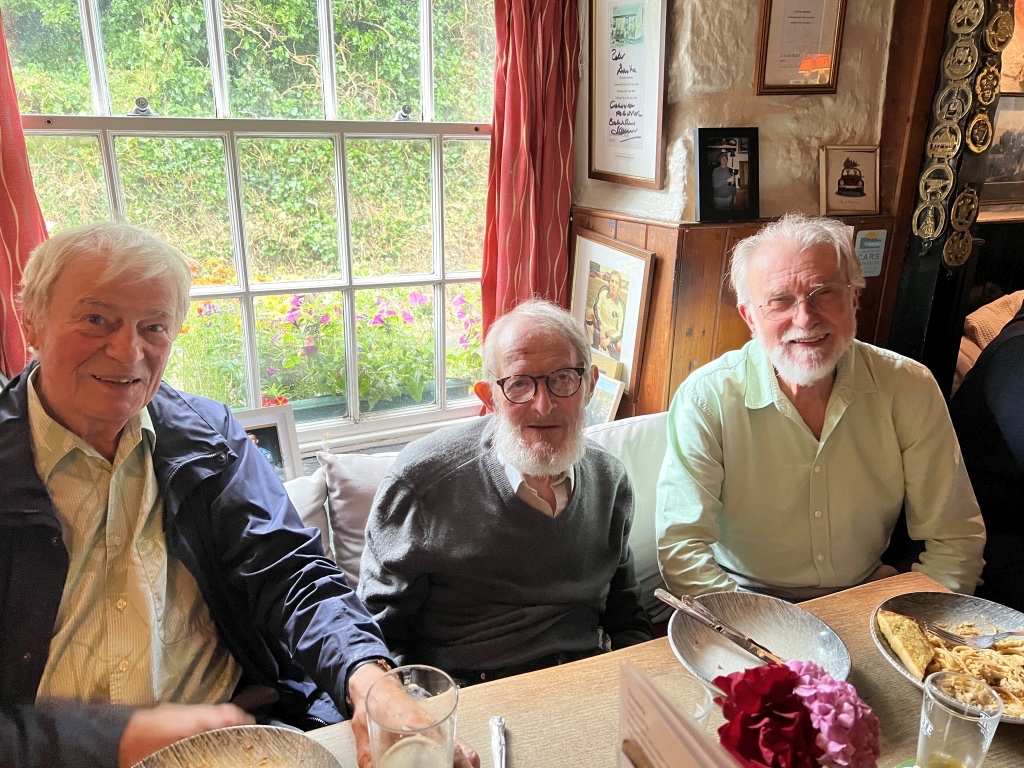
the Logan Rock Inn, near Land’s End. (Photo courtesy of David Dennis)
The book will bring back many memories for Old Fullerians. It’s a hardback running to 190 A4 pages, and it costs £30 including UK postage. If you would like a copy please message me using the Contact page and I will put you in touch with one of the authors who will procure one.

And if you have memories of John Didcock, please do share them in the comments section or message me through the Contact page. I’ll make sure they reach him.
Congratulations to David, Simon and Julian for this ambitious and wholly successful project to honour their former teacher. Mostly though, thanks to John Didcock himself for his dedication, knowledge and enthusiasm, which enriched the lives of so many boys. Happy birthday sir!
***************
Subsequently David Dennis has provided more details on the presentation of the book and how it was received.
“It was while he was sitting at home, surrounded by friends, that I presented him with ‘The Book’. It is fair to say that he was amazed that such an item had been produced, and even more so to learn that over 60 people had contributed to its contents. To start with, he flicked through it rather haphazardly, as if in disbelief, while expressing his thanks – in particular to Simon Groves, who I’d explained had shouldered the major publishing effort.
I have subsequently heard from more than one source that he has been reading the book avidly, getting through around half of it over the last couple of days. In a phone conversation with one of the contributors he said “Reading it, I was very moved. I didn’t know I’d had an effect anything like that on so many people.” He also said “If there’s just one thing that I did right, it was getting Mike Thompson to learn the horn!”
Those of you who know John well will be aware that he’s always been very understated, so to hear him admit out loud to being ‘very moved’ means more than it would coming from most people’s mouths. I am one of at least two contributors who have confessed to a lump in the throat at hearing those words.”


 Ramblings
Leave a comment