
Graham Taylor signing a programme for me at the end of the Abbots Langley Tough Ten race
I admit to being an armchair football fan these days. But in the 1982 Mum and Dad gave me a Watford FC season ticket for 1982/83 for my birthday – I like to think that Mum knew it would bring me home more frequently. Whatever the reason, it was a great season to watch them. Newly promoted to the (old) First Division for the first time in their history, they had a storming season, with Graham Taylor’s brand of Blissett-and-Barnes-storming direct football creating havoc in many defences. They finished second only to Liverpool, and qualified for European football for their first, and to date only time.
Football supporters are fiercely tribal, and that was part of the pleasure of standing on the terraces at Vicarage Road. After being as polite, diplomatic and self-contained as I could manage during the working week, what a relief to abandon rationality and see a battle played out as good vs evil: the opposition, obviously, were a load of dirty, cheating bastards, and the referee was always completely biased against us.
And the joy when we scored a goal! And there were many, 49 in 21 home games that season, with Blissett and Barnes spearheading the attack. I’m intrigued by what we football fans say when our team scores. Not “Hooray!”, not “Goal!”. Just “Yeeeesssss!”. I imagine that is a response to the unspoken question in our heads: “Will he score?”.
That ecstatic goal moment, the relief when the final whistle confirms a famous victory, these are triumphant vindications of our irrational faith. And I suspect, within strict limits, these emotions are a healthy release from daily stress – although not so healthy if they spill into racist chants, violence between opposing fans, or damage to international relations. But if we can blow off some patriotic steam, say, during a World Cup, and go back to business as usual the Monday after, surely that’s better than armed conflict?
More damaging, I think, are tribal tendencies in politics, which I try to resist. My mother was a lifelong Labour voter (at least, once she left the Communist Party). But like the rest of our family, she was disgusted with Tony Blair’s decision to support the US invasion of Iraq in 2003. However, when the General Election came round in 2005, unlike many who abandoned Labour to vote for the anti-war Liberal Democrats, she entered the polling booth and found herself unable to vote other than Labour.
No doubt she was influenced by her childhood in poverty on Merseyside between the wars, and her parents’ unwavering socialist views. But if leaders escape punishment for their disastrous policies thanks to overly loyal voters, they or their successors will make the same mistakes again.
My instincts are left of centre – I have never voted Conservative – but pragmatic. Unfashionably, I feel more comfortable with a (fairly) principled, sensible Tory in the mould of Ken Clarke or David Gauke than with a strident left winger, such as Tony Benn or Jeremy Corbyn. I find politics tedious and frustrating, and can’t watch more than thirty seconds of juvenile point scoring on Question Time, whether Parliamentary or BBC.
Boris Johnson has many glaring faults, and has made many mistakes, but would it hurt to concede that, for instance, he made the right calls to get Britain quickly vaccinated against Covid, or that he might actually be sincere in his concerns about climate change? Or – to return to the that vexed subject – just because, in many people’s view, Tony Blair made a huge mistake over Iraq, does that mean he doesn’t deserve a hearing on other matters?
I’m relieved at least that the next UK election is likely to offer us a choice between Sunak and Starmer, two relatively pragmatic politicians with substantial ideological common ground, after the dishonesty of Johnson and the zealotry of Corbyn. Unfortunately the US is only becoming more polarised, with dialogue between Republicans and Democrats vanishing, in conditions that some analysts have described as the early stages of a possible civil war. The support shown by a majority of Republicans for the attempted January 6th coup is ominous.
There is an old joke about a tourist who is walking in a no man’s land between Protestant and Catholic neighborhoods in Belfast when he is suddenly grabbed by a masked man who asks him: “Are you a Protestant or a Catholic?” The tourist answers: “I’m a Jew.” And the masked man asks him: “Well, are you a Protestant Jew or a Catholic Jew?”
Similarly we are sometimes encouraged to make meaningless choices, thankfully often on less weighty matters. For example, in the world of music, people will ask – do you prefer the Beatles or the Stones? John or Paul? The most notorious music based schism was the regular violence between mods and rockers in the 1960s, often fanned and exaggerated by media reports. Was it not possible to enjoy Marvin Gaye as well as Little Richard, Eddie Cochran as well as The Small Faces? Why not just be glad to live in a world where we have all of their music?
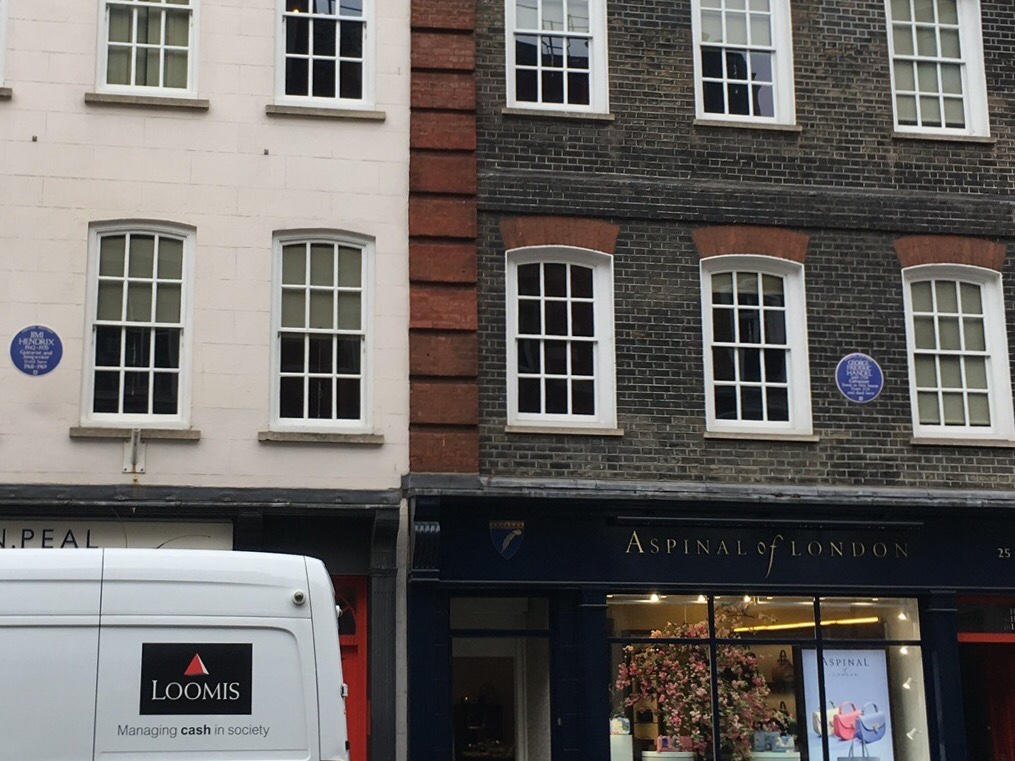
I enjoyed a visit to the Handel/Hendrix house in Brook Street, London, where the two great musicians who lived at different times in neighbouring properties are celebrated side by side, with no attempt to compare or rank them. Indeed, Jimi Hendrix thought it really cool that the composer had lived there, and purchased and enjoyed an album of Handel’s Messiah. I like to think that Handel would similarly have appreciated Hendrix.
So remember, there are some of us who can enjoy Del Shannon and Del Amitri. And for whom One Fine Day could be The Chiffons or Puccini, and Queen of the Night could be Wolfgang or Whitney. It’s a big, wonderful world out there. You don’t always have to choose. And you’re allowed to change your mind. It ain’t Spurs v Arsenal, you know.


 Ramblings
Leave a comment